Before Ortolani filed suit, bloody boxing matches were allegedly used to punish boys
Provincetown Independent
By Jack Styler
Feb 18, 2026
[Link to original article found at bottom of post]
ORLEANS — Tim DeLude grew up at the Community of Jesus (CoJ), the Rock Harbor enclave that is the subject of a federal lawsuit alleging mistreatment of children and forced child labor. DeLude left the group in 1999 at age 18, but he still has a hard time talking about some things that happened there 30 years ago.
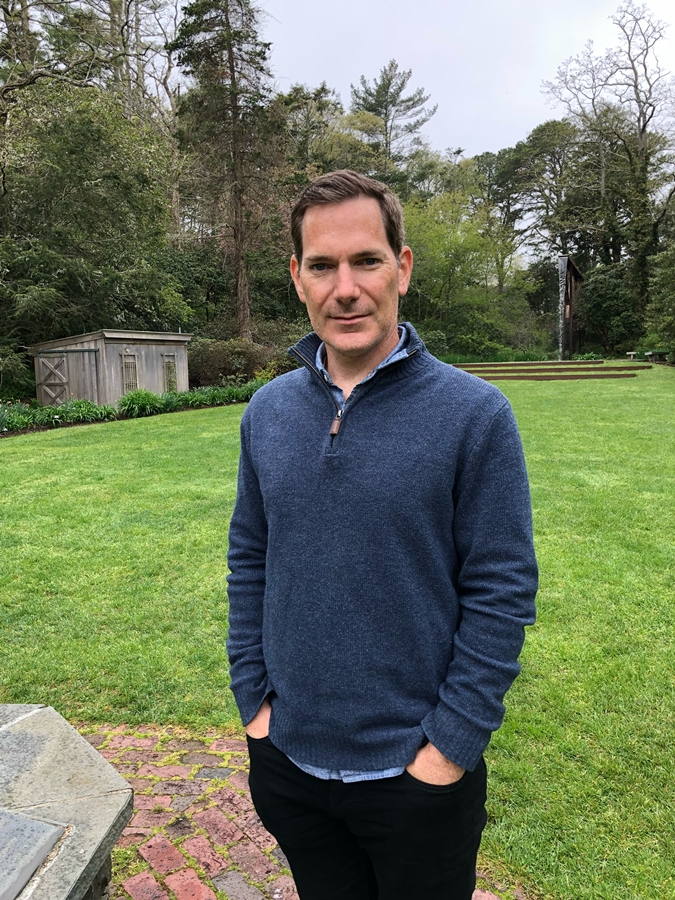
“I never trusted anyone my entire childhood,” he said, and at age 45 he still experiences flashbacks and nightmares.
Some of DeLude’s worst memories are of “Boys Club,” which he said was a program of punishment he was required to participate in starting at age 13. Its leaders “put us through hell,” he said.
Boys Club, said DeLude, included mandatory boxing matches designed to “teach you a lesson.” Any boy who had “acted out” that week would be forced to box “against someone who is three or four years older than you,” he said. The adults used the older boys to “kick the shit out of you,” said DeLude. Remembering those beatings in an interview, he paused to collect himself. “I went through a lot in those years,” he said.
The Independent has interviewed a total of 24 ex-residents of the CoJ who say that the group’s leaders employed rituals of humiliation, family separation, and forced labor to maintain control of the group. Seven of those ex-residents also say that in the 1990s and early 2000s leaders used physical abuse — making boys beat each other up in Boys Club boxing matches — to control and punish teenagers.
Since Oliver Ortolani filed his suit last July, lawyers have presented contrasting characterizations of the Community of Jesus to the court. Ortolani’s complaint calls the CoJ a “high demand/high control group” that demands “absolute obedience” from members and alleges that he was subjected to a “grueling” program of forced labor in 2019 and 2020, when he was 12 and 13, and deprived of an education.
Jeffrey Robbins, the CoJ’s lawyer, argued that the community is a church that cannot be held liable for the actions of individual members and called Ortolani’s lawsuit “frivolous” and “borderline fraudulent.”
The Boys Club Leaders
Boys Club was designed to wear teenage boys down, said seven former residents, six of whom were participants in it. Their descriptions of forced exercise, reported in detail here for the first time, include similarities to Oliver Ortolani’s account of forced labor at the CoJ.

Several of the adult men who organized Boys Club remain leaders in the CoJ and one has been an elected official in Orleans. They are Paul Moore, Richard K. Pugsley, and Christopher Kanaga, a lawyer who was Orleans’s delegate to the Barnstable County Assembly from 2008 to 2020. None of the three responded to repeated interview requests from the Independent.
Robbins, the CoJ’s lawyer, wrote in an email that the allegations of violence at Boys Club were “garbage,” and that the program consisted of “routine sports activities organized in response to the desire expressed by some teenagers for more organized sports, which over the years involved literally dozens of teenagers for whom activities like bicycling, weight lifting, rugby, boxing, hiking, camping, and rafting trips and the like were provided.”
The six men who spoke to the Independent about their time in Boys Club all disputed Robbins’s description of the activities as voluntary.
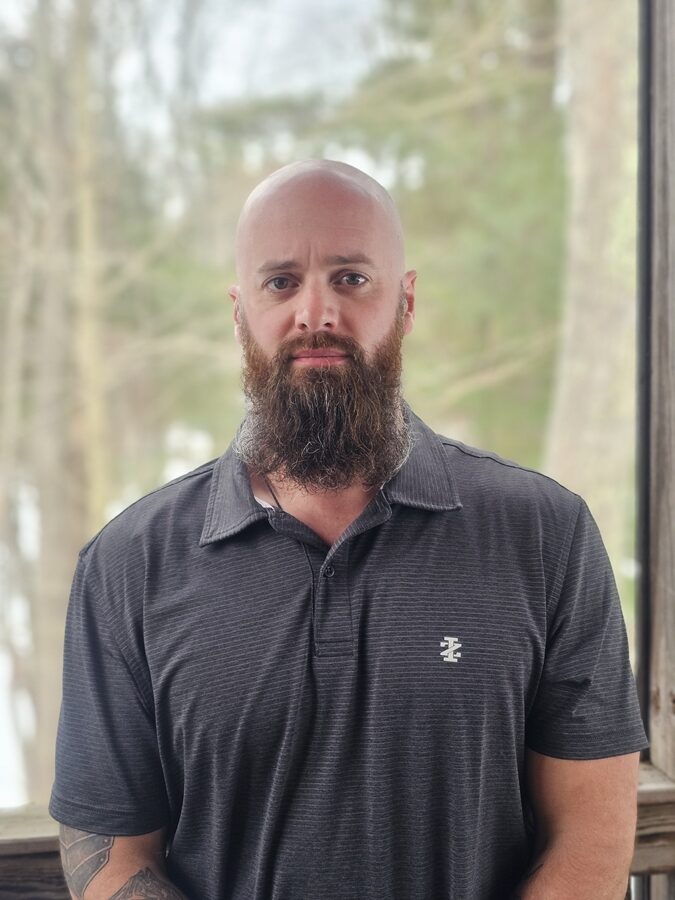
“Participation was mandatory,” said Todd Lynch, 50, who now lives in California. “Complaints were punished. There was no opting out. Recasting these experiences as benign, youth-requested activities does not align with reality and ignores the consistent pattern of control, fear, and punishment that defined them.”
‘We Were All Afraid’
Twice a week in summer, the teenage boys gathered in a large yard in the Rock Harbor enclave between two communal houses — named Arimathea and Carmel — and waited on one knee for their boot camp-style training to begin.
The sessions would often begin with a run through the woods and a weightlifting session in the basement of Arimathea, participants said, followed by cycling to 95 Southern Eagle Cartway in Brewster — where, 25 years later, Oliver Ortolani claims he and other teenage boys were forced to help build the community’s Arts Empowering Life Performing Arts Center.
In Brewster, the boys ran a homemade obstacle course and sprinted in hot greenhouses. There, or back on the lawn where the afternoon sessions started, the leaders would force teens and young adults to box each other, said all six participants.
“We were all afraid of Boys Club — all of us,” said Andrew Haig, 39, who left the CoJ in 2004 and now lives in New York City. Boys Club was “a summer-long hazing ritual disguised as a fitness club,” he said, and was used to punish teenage boys for infractions as small as having a “bad attitude.”
“If you did something wrong at any point in the week, someone would report it to Paul Moore and Chris Kanaga,” said Haig. “They would punish you for it.”
“It was petrifying,” said one former participant, now in his 40s, who spoke on condition of anonymity for fear of being cut off from family members who still live at the compound. Although the boys wore gloves and headgear, the blows were hard enough that “bloody noses were common” and “mild concussions probably happened and were ignored,” he said.
“We essentially got beaten for a few hours and then we might go play rugby,” he said.
“Boys Club hung over your whole week all summer long,” said another former participant who spoke on condition of anonymity, and there was boxing “almost every time.”
Bryan Catlin, who left the CoJ in 2004, said that he was usually paired with his physical peers but once was made to fight a boy who was eight inches taller and at least 30 pounds heavier than he was. The other boy’s arms were so long that Catlin “couldn’t even get remotely close to him,” he said. “He kicked my ass.”
Catlin said that in 2002 and 2003, the last two years of Boys Club, the boys figured out how to pull their punches to avoid hurting each other.
“We were given no qualified instruction and no proper equipment,” said Lynch. “Several boys refused outright. When they did, others were pressured to fight them anyway — sometimes boys half their size. This was dangerous and degrading.”
For the 11 years that Boys Club took place, from at least 1993 to 2004, its leadership was steady. All six former participants said that Kanaga and Moore ran the group; four of them said that Richard K. Pugsley was also a leader.
A seventh man, William Farnsworth, was too old to participate in Boys Club when it began in 1993 but said he helped build the obstacle course in Brewster and that Moore led the group at that time while Kanaga was “there for some of it.”
Moore, 64, is the husband of the community’s current leader, Karen Moore, and the founder and manager of Ponderosa Landscaping in Eastham.
Kanaga, 72, the former Orleans assembly delegate, is currently on the town’s finance committee.
Pugsley, 59, is the second in command, or “sub-prior,” of the CoJ, according to Ortolani’s lawsuit, and is the director of the group’s renowned Gloriae Dei Cantores choir.
Robbins would not confirm whether he is representing any of the three men.
Lynch said that the leaders of Boys Club were part of a larger system of discipline.
“When the same coercive practices are described by numerous people over several decades, it reflects a persistent pattern of abuse within the system,” Lynch told the Independent. Oliver Ortolani’s allegations “mirror my own experiences,” which “suggests the fault lies with the institution itself, not with the many victims who experienced it at different points over time,” he said.
“It’s heartbreaking to read Oliver’s story,” said Tim DeLude. “That was my story, too.”
Parallels in Ortolani Suit
Some of the details that the participants in Boys Club recounted align with the allegations in Ortolani’s lawsuit.
Lynch recalled being awakened as early as 4:50 a.m. to start workouts — and said that even if he maintained the required cycling pace of 20 miles per hour he might be punished for not being “in the spirit.”
In his lawsuit, Ortolani also recalled being awakened at 4:30 or 5 a.m. and forced to do two and a half hours of exercise. Once at the Brewster site, Ortolani said, he would be “shouted at, shamed and told his ‘spirit was off.’ ”
The adults would continue to berate the children at the worksite until they asked for forgiveness, said Ortolani in his complaint.
Ortolani also alleges that his brother Noah was once told he had spoken disrespectfully to an adult and was punished with six months of “hard times” — enforced isolation during which children and adults were not allowed to speak to Noah, who was then 13. During those months, Noah sat alone in a pickup truck while the other teenagers worked to build the performing arts center, the lawsuit claims.
Haig, who participated in Boys Club from 1999 to 2004, said that the furniture was removed from his bedroom as a punishment and he was forced to sleep on a foam pad on the floor for six months. He was not allowed to speak to anyone except his parents during those months.
Since leaving the CoJ, Haig said three different therapists have diagnosed him with post-traumatic stress disorder from his experiences at the Orleans compound. In his lawsuit, Ortolani, too, said he was diagnosed with post-traumatic stress from “near daily psychological coercion.”
Since Ortolani filed suit, many former residents of CoJ have broken their longstanding silence to talk about their experiences publicly.
“You read these comments on the social media, and everyone’s like ‘We knew this was going on,’ ” said Tim DeLude. “Now people are getting pissed off. And they should be. This has literally been happening right under our noses for decades.”
The legal teams for both Ortolani and the CoJ submitted briefs to the court in January. Judge Leo Sorokin is expected to hand down a decision about whether the case will be dismissed or proceed to discovery in the next few months.
Comments are closed